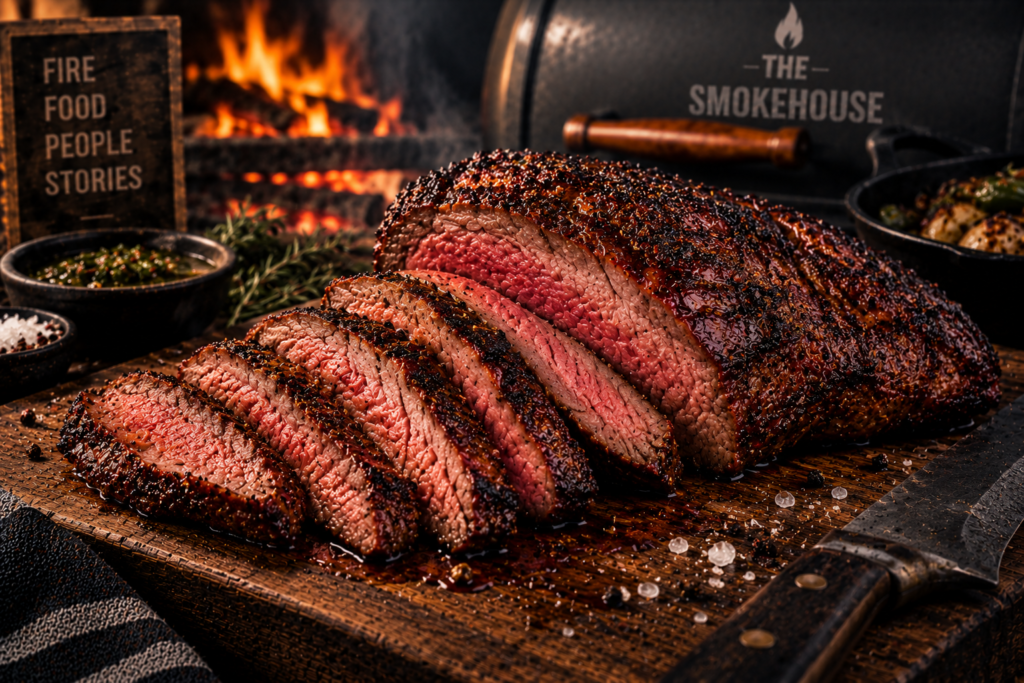
Reverse Sear – How to Cook the Perfect Steak
Reverse sear is a reliable method for thick steaks. Cook the meat gently first, then finish with intense heat for a crisp crust.
What is reverse sear?
You reverse the usual order: indirect low heat first, hard sear last. This gives better control over doneness.
Which meat works best?
Use thicker steaks such as ribeye, strip steak, sirloin or tomahawk. Thin steaks cook through too quickly.
Start with low heat
Cook away from direct heat at around 100-120°C and use a thermometer for control.
When should you sear?
Remove the steak before it reaches the final target temperature, then make the grill, pan or fire very hot.
Sear hard and fast
The sear should build color and crust without overcooking the center.
Rest before serving
Let the steak rest briefly before slicing so the juices settle.
Summary
Reverse sear is about control: gentle heat first, high heat last and a thermometer all the way.
Summary
Reverse sear is a reliable method for thick steaks. By cooking low first and searing at the end, you get an even internal temperature and a better crust.
After this guide you will be able to
- Use reverse sear for thicker steaks
- Cook gently first and sear hard at the end
- Use a thermometer for better control
Use a thermometer
Reverse sear works best when you know the internal temperature of the steak.
Do not sear too long
The sear should build crust, not overcook the inside of the steak.
FAQ
Common questions about this guide.
Can I reverse sear a thin steak?
It is possible, but reverse sear works best on thicker steaks that do not cook through too quickly.
Do I need a smoker?
No. You can use a grill, smoker or oven for the low-temperature phase and then sear over high heat.
Should the steak rest before searing?
A short rest can help while you raise the heat for searing, but the important thing is not to overcook the steak.
Why is reverse sear better?
It gives more even doneness and better control, especially on thick cuts.