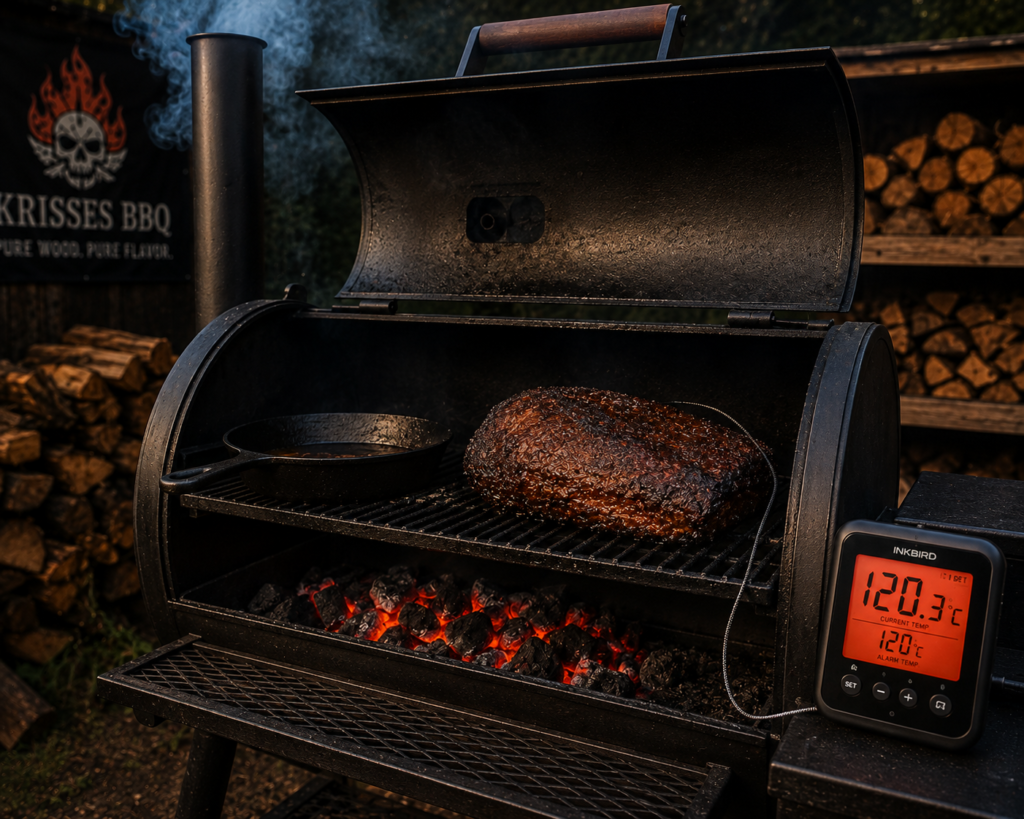
What Temperature Should You Grill At? Low and Slow, Hot and Fast, and Direct Grilling
Grilling temperature affects flavor, texture, juiciness and cooking time.
Low and slow
Lower heat over a longer time works well for tougher cuts with connective tissue.
Hot and fast
Higher heat over a shorter time can build color, crust and speed, but needs more attention.
Direct grilling
Direct grilling cooks food right over the heat source and works for foods that cook quickly.
Indirect grilling
Indirect grilling places food away from the heat source so heat circulates around it.
Stable temperature matters
A stable temperature is often more useful than chasing one perfect number.
Measure at the cooking surface
The temperature at the food can differ from the lid thermometer.
Summary
Choose the temperature and method based on the cut and the result you want.
Summary
There is no universal grill temperature. The right heat depends on the meat, the method and the result you want.
After this guide you will be able to
- Low and slow is useful for tougher cuts
- Hot and fast gives speed and crust but needs attention
- Direct grilling works for foods that cook quickly
- Indirect heat gives more control for larger cuts
- Stable temperature matters more than perfect numbers
- Measure temperature near the food when precision matters
Choose heat by method
Start with the cooking method and the cut of meat, then choose the temperature range that fits.
FAQ
Common questions about this guide.
What does low and slow mean?
It means cooking at lower temperature for a longer time, often for tougher BBQ cuts.
When should I grill hot and fast?
Use hot and fast for foods where you want quick cooking, color and crust.
What is direct grilling?
Direct grilling means cooking food directly over the heat source.
What is indirect grilling?
Indirect grilling means the food is placed away from the heat source so heat circulates around it.
Is stable temperature important?
Yes. Stable temperature makes the cook more predictable and easier to manage.