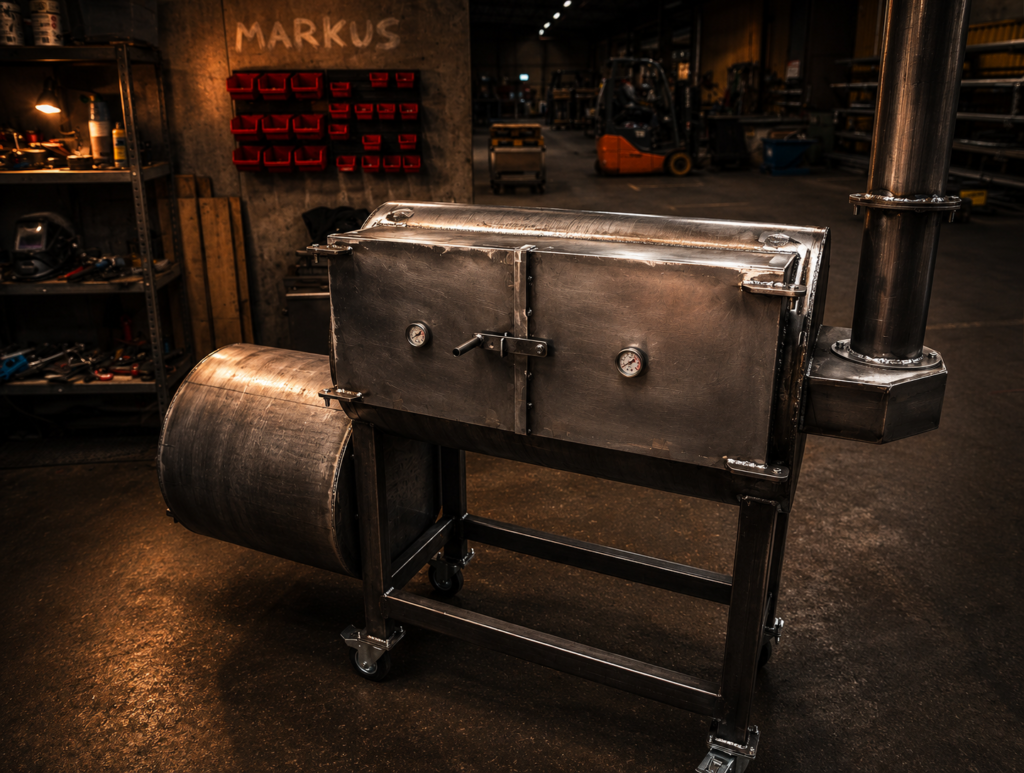
How to Season a New Smoker – First Burn Step by Step
A new smoker should be cleaned, heated and seasoned before the first real cook.
What does seasoning a smoker mean?
Seasoning means heating the smoker, often with a thin layer of oil on selected surfaces, to prepare and protect it.
Start with the manufacturer’s instructions
Always follow the instructions for your specific smoker first.
Place the smoker safely
Put it outdoors on a stable, fire-safe surface away from anything heat can damage.
Inspect the smoker before cleaning
Check the firebox, chamber, grates, chimney, dampers and hardware. Remove all packaging.
Clean all food-contact surfaces
Clean and dry grates and any surfaces that may touch food.
What oil should you use?
Use a neutral cooking oil with a reasonably high smoke point, such as rapeseed or sunflower oil.
Apply a very thin layer
Oil only the surfaces that need it and wipe away excess. The surface should not look wet.
Why a thin layer matters
Too much oil can turn sticky instead of forming a protective surface.
Build a small, clean fire
Start small and let the smoker come up to temperature gradually.
Warm the smoker gradually
Let the temperature rise step by step with enough airflow for clean combustion.
Use the first burn as a test
Watch how the smoker reacts to wood, airflow and damper changes.
Should you cook food during the first burn?
No. Let the first burn prepare the smoker before cooking food.
Let the smoker cool naturally
Let the fire burn down and allow the smoker to cool naturally.
If the surface became sticky
Too much oil or too little heat is usually the cause. Wipe excess and heat again with a thinner layer.
How do you maintain the seasoned surface?
Keep the smoker clean and dry, remove ash and protect exposed steel as needed.
Common mistakes
Using too much oil
This can create a sticky surface.
Oiling the wrong surfaces
Follow the manufacturer’s recommendations.
Firing too hard immediately
Warm the smoker gradually.
Poor airflow
A smoldering fire creates dirty smoke.
Cooking too early
Use the first burn as preparation, not a food cook.
Leaving ash behind
Remove ash after cooling because it can hold moisture.
When is the smoker ready?
It is ready when cleaned, heated, cooled, inspected and dry.
Remember
Seasoning is preparation, protection and a first lesson in how your smoker behaves.
Summary
The first burn prepares the smoker, removes residue, protects surfaces and helps you learn how the pit behaves before cooking food.
After this guide you will be able to
- Read the manufacturer's instructions first
- Clean and dry food-contact surfaces before heating
- Use only a very thin layer of oil where appropriate
- Warm the smoker gradually with a clean fire
- Do not cook food during the first seasoning burn
- Remove ash after the smoker has cooled
Thin layers are better
A thin layer of oil can protect the surface. Too much oil can become sticky.
FAQ
Common questions about this guide.
Do I have to season a new smoker?
Always follow the manufacturer's instructions. In many cases, a first burn and seasoning step is recommended before cooking.
Can I cook food during the first burn?
It is better not to. Use the first burn to clean, heat and prepare the smoker.
What oil should I use?
A neutral cooking oil with a reasonably high smoke point, such as rapeseed or sunflower oil, often works well.
Why did the surface become sticky?
Usually because too much oil was applied or the heat was too low.
Should I remove ash afterwards?
Yes. Once everything has cooled, remove ash because it can hold moisture and contribute to rust.