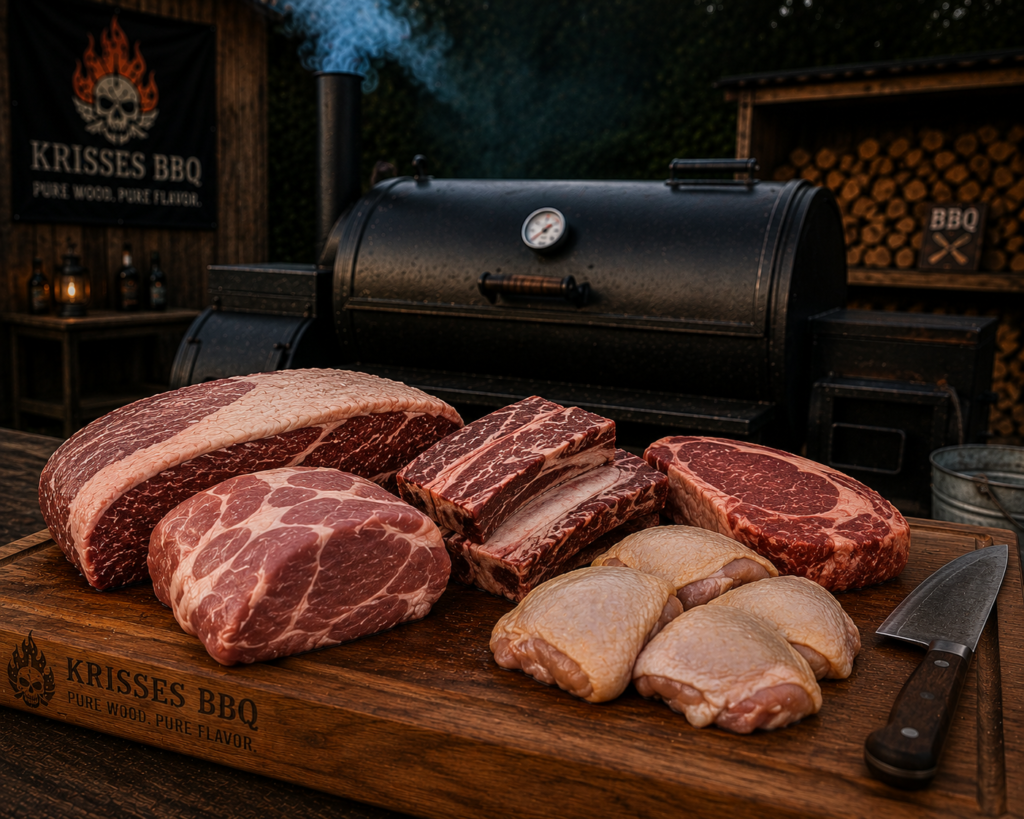
How to Choose the Right Cut of Meat for BBQ
Choosing the right cut affects cooking time, tenderness, flavor and how forgiving the cook will be.
Start with the cooking method
Choose the cut based on whether you plan to cook low and slow, hot and fast or directly over heat.
Cuts for low and slow
Tougher cuts with connective tissue, such as brisket, pork shoulder and beef ribs, often work well.
Cuts for hot and fast
Tender cuts, steaks, burgers and smaller pieces can often be cooked faster over higher heat.
Fat and marbling
Fat contributes flavor and juiciness, especially during longer cooks.
Even thickness helps
Even thickness helps the meat cook more evenly.
Ask your butcher
Tell the butcher how you plan to cook so they can help you choose the right cut.
Summary
The right cut makes BBQ easier. Match the meat to the method and your cooker.
Summary
Good BBQ starts with the right cut. Match the meat to the method and choose cuts that fit your grill, smoker and cooking plan.
After this guide you will be able to
- Choose the cut based on the cooking method
- Tougher cuts often work well low and slow
- Tender cuts can often be cooked hot and fast
- Fat and marbling help flavor and juiciness
- Even thickness makes cooking easier
Ask for the method
Tell your butcher how you plan to cook. That makes it easier to choose the right cut.
FAQ
Common questions about this guide.
What cut is best for low and slow BBQ?
Cuts with connective tissue and enough fat, such as brisket, pork shoulder and beef ribs, are common choices.
What cuts are good for quick grilling?
Tender cuts like steaks, burgers and smaller pieces work well over higher heat.
Is fat important?
Yes. Fat contributes flavor and can help keep meat juicy.
Why does thickness matter?
Even thickness helps the meat cook more evenly.
Should beginners avoid difficult cuts?
It can be smart to start with more forgiving cuts before moving on to more demanding BBQ projects.