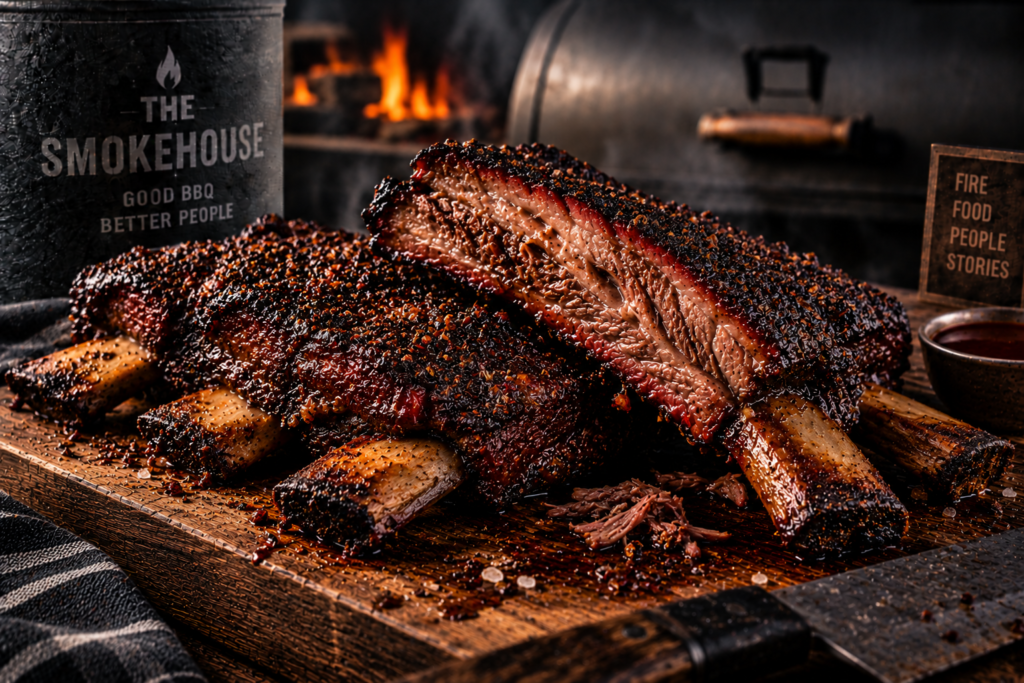
Beef Ribs on an Offset Smoker – Complete Guide
Few BBQ dishes impress as much as really good beef ribs. With a strong bark, juicy meat and deep smoke flavor, they are a favorite among BBQ enthusiasts around the world.
Compared with brisket, beef ribs are often a little more forgiving, but they still require patience, stable temperature and clean smoke to become truly good.
In this guide we go through the whole process – from choosing the meat to serving.
What Are Beef Ribs?
Beef ribs come from the rib section of the cow and are very different from ordinary pork ribs. They are much larger, contain more meat and have a deeper flavor.
There are several types of beef ribs, but for low & slow BBQ, plate ribs are often the most appreciated choice thanks to their good marbling.
Choose the Right Meat
When buying beef ribs, look for:
- Generous marbling
- An even layer of meat over the bones
- Fresh red color
- Firm texture
The better the meat quality, the better the final result.
Prepare the Meat
Only trim away loose pieces of fat and membranes that hang loosely.
Leave most of the fat cap in place because it helps keep the meat juicy during the long cook.
Seasoning
Beef ribs do not need complicated spice blends.
A classic BBQ rub works perfectly:
- Coarse salt
- Coarsely ground black pepper
- Garlic powder
- Onion powder
- Paprika
Let the seasoning sit for at least 30 minutes before cooking.
Start the Smoker
Bring the smoker up to about:
120–135°C
Use dry, good-quality wood.
The goal is a thin, almost invisible blue smoke.
Thick white smoke gives a bitter flavor and should be avoided.
Put the Meat On
Place the beef ribs bone side down.
Let them cook undisturbed for the first few hours.
Avoid opening the lid unnecessarily because the temperature drops and the cook takes longer.
When Should You Spritz?
After about three hours, the meat can be lightly spritzed every 45–60 minutes.
Examples:
- Apple juice
- Apple cider vinegar diluted with water
- Water
This helps the surface retain moisture without ruining the bark.
Should You Wrap Them?
There are two common methods.
Without Foil
Gives:
- Stronger bark
- Deeper smoke flavor
With Foil or Butcher Paper
Gives:
- Shorter cooking time
- Juicier meat
Both work very well.
When Are Beef Ribs Done?
The most important rule is:
Do not rely only on temperature.
An internal temperature around 95–98°C is common, but the decisive factor is how the meat feels.
When a thermometer slides in without resistance, the meat is done.
Rest the Meat
Always let beef ribs rest for at least 30–60 minutes.
During the rest, the juices redistribute evenly and the result becomes much better.
Serving
Slice between the bones and serve right away.
Perfect with:
- Coleslaw
- Pickled red onion
- Mac & Cheese
- Beans
- Potato salad
Common Mistakes
- Too high a temperature.
- Poor wood with too much moisture.
- Thick white smoke.
- Opening the lid too often.
- Too short a rest.
Summary
Beef ribs require patience, but the reward is one of the most impressive results in BBQ. With stable temperature, clean blue smoke and good ingredients, you get meat that is juicy, tender and full of flavor.
After this guide you will be able to
- Learn how to choose the right type of beef ribs.
- Understand when ribs are done without only looking at temperature.
- Learn how to build bark without drying out the meat.
Be patient
Do not open the lid unnecessarily. Every time heat and smoke escape, the cook takes longer.
Perfect bark takes time
Do not rush the result by raising the temperature. Bark builds slowly.
Every rack is different
Cooking time varies depending on size and fat marbling.